
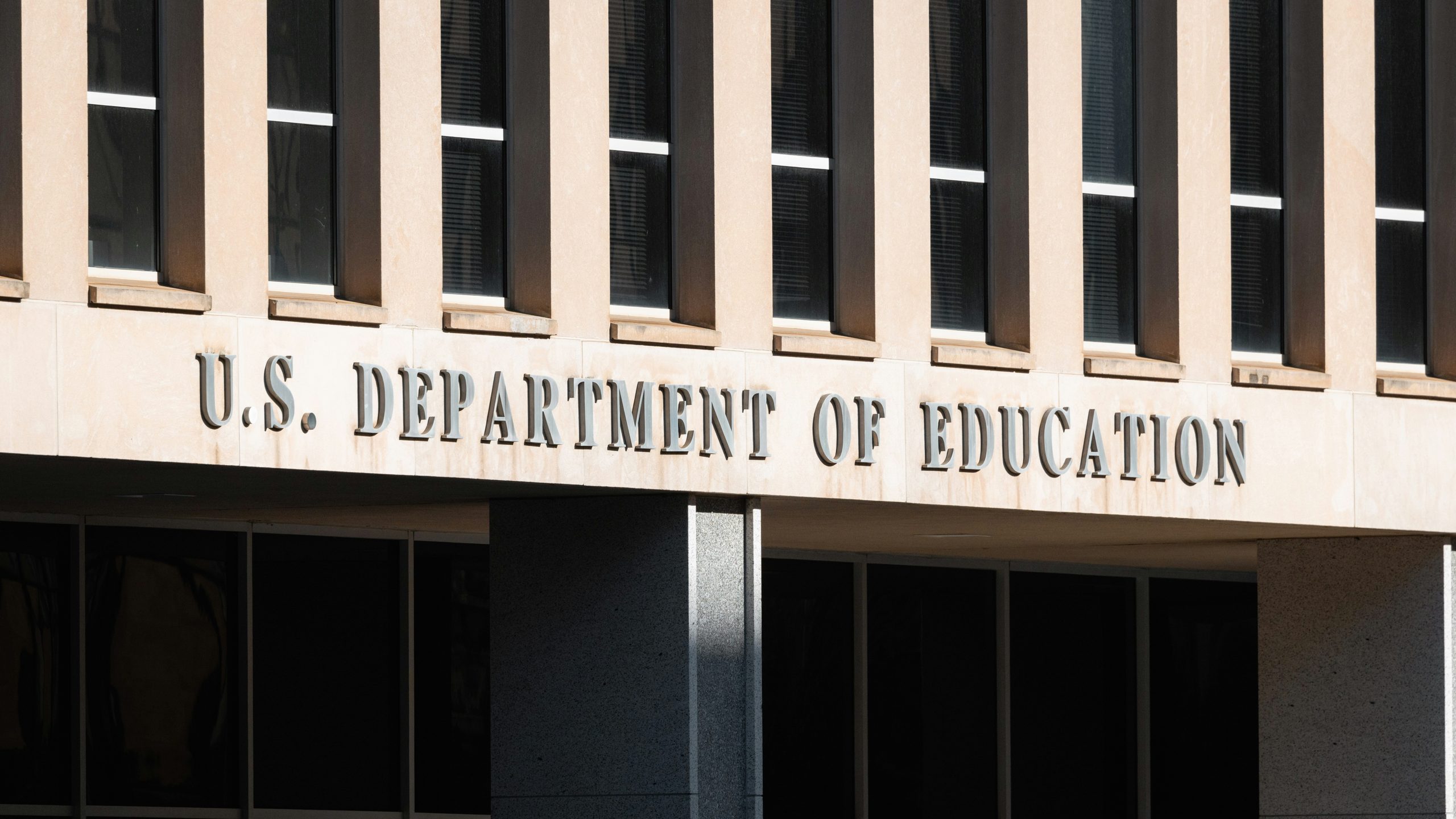
A recent Inside Higher Ed article (How Accreditation Changes Could Impact Professional Licensure, August 31, 2026) highlights an accreditation issue that colleges and universities offering programs leading to professional licensure should be watching closely.
The U.S. Department of Education is scrutinizing several programmatic accreditors, with some facing the potential loss of federal recognition. At the same time, some accreditors are voluntarily relinquishing that recognition.
At first, this may seem primarily like an academic or federal funding issue. But in some professions and jurisdictions, it could have significant consequences for professional licensure.
Accreditation and Licensure: The Overlap Matters
In the U.S., professional licensure is governed at the state level and states establish their own requirements for each licensed profession. Those requirements can address everything from education and examinations to supervised experience, background checks, and more.
For some license types, states include specific program-level accreditation requirements for an applicant’s education.
And this is where the details matter.
A state might require a license applicant to graduate from a program accredited by a specified programmatic accreditor. In that situation, whether that accreditor is recognized by the U.S. Department of Education does not affect the graduate’s eligibility for licensure. In these scenarios, the statute, regulation, or rule list one or more specific programmatic accreditors that are accepted.
But another state’s licensing requirements might specifically require an applicant to graduate from a program accredited by an accreditor recognized by the U.S. Department of Education.
That distinction could become enormously important.
If a programmatic accreditor loses or voluntarily relinquishes U.S. Department of Education recognition, but the state’s licensing board requires accreditation by a recognized accreditor, graduates of those programs will no longer be eligible for a license.
The state hasn’t changed its licensing law or rule. The institution may still be accredited by the same programmatic accreditor. But one change at the federal level could alter whether graduates meet the state’s existing licensure requirements.
Impacted Professions
The Inside Higher Ed article provides several examples of potentially impacted professions, including attorneys, chiropractors, naturopaths and direct-entry nurse midwives. Based on our years of experience researching educational requirements across all U.S. states, we know there are many more.
We analyzed a dozen different license types in The Bookmark, our one-of-kind research platform for professional licensure research, and identified half are potentially impacted licenses, including Alcohol and Drug Counselor, Advanced Practice Registered Nurse (Clinical Nurse Specialist and Nurse Practitioner), Dental Hygienist and Dietician.
Audiologist is a prime example of just how widespread the requirement for completion of a program that is accredited by an accreditor recognized by the U.S. Department of Education can be. Note that these examples are only a portion of the states that currently include this requirement in statute or regulation.
Arizona (Ariz. Rev. Stat. Ann. § 36-1901)
§ 36-1901. Definitions In this chapter, unless the context otherwise requires: 1. “Accredited program” means a program leading to the award of a degree in audiology that is accredited by an organization recognized for that purpose by the United States department of education.
Oregon (ORC Ann. 4753.06)
4753.06 Requirements for licensure No person is eligible for licensure as a speech-language pathologist or audiologist unless:
(C) If the person seeks licensure as an audiologist, the person submits to the board an official transcript demonstrating that the person has at least a doctor of audiology degree or the equivalent as determined by the board. The person’s academic credit must include course work accumulated in the completion of a well-integrated course of study approved by the board and delineated by rules dealing with the normal aspects of human hearing, balance, and related development and clinical evaluation, audiologic diagnosis, and treatment of disorders of human hearing, balance, and related development. The course work must have been completed in an audiology program that is accredited by an organization recognized by the United States department of education and operated by a college or university accredited by a regional or national accrediting organization recognized by the board.
Ohio (OAC Ann. 4753-3-04)
4753-3-04 Educational requirements for licensure (A) To be eligible for licensure, an applicant must demonstrate that the following course work requirements are met: (1) He/she obtained a broad general education, which may include study from among the areas of human psychology, sociology, psychological and physical development, the physical sciences, especially those that pertain to acoustic and biological phenomena, and human anatomy and physiology, including neuroanatomy and neurophysiology. (2) For licensure as an audiologist applicants shall have obtained at least a doctor of audiology degree before or after January 1, 2006 or the equivalent from an audiology program accredited by an organization recognized by the “United States Department of Education” or at least a masters degree in audiology or equivalent if all requirements under division (F) of section 4753.06 of the Revised Code were met prior to January 1, 2006.
Texas (16 Tex. Admin. Code § 111.70)
§ 111.70. Audiology License–Licensing Requirements (b) Education. The doctoral degree in audiology or a related hearing science shall be completed at a college or university that has a program accredited by a national accrediting organization that is approved by the department and recognized by the United States Secretary of Education under the Higher Education Act of 1965 (20 U.S.C. §1001 et seq.).
If the programmatic accreditor for audiology programs currently recognized by the U.S. Department of Education, the Council on Academic Accreditation in Audiology and Speech-Language Pathology loses or voluntarily relinquishes recognition by the U.S. Department of Education graduates of audiology programs will no longer meet licensure requirements.
All of these states may want to consider revising the statute or regulation to prevent a scenario where there are no license-eligible audiology program graduates. Even a small change to the language, for example changing an “and” to an “or”, could provide the licensing Board flexibility to recognize other accreditors that are not recognized by the U.S. Department of Education.
This example from D.C. demonstrates a more flexible approach.
D.C. (17 DCMR § 7802)
17-7802. LICENSURE REQUIREMENTS 7802.1 Except as otherwise provided in this chapter, an applicant for a license to practice audiology shall furnish proof satisfactory to the Board that the applicant: (a) Graduated with a Master’s degree or a Doctoral degree (Ph.D. or Au.D.) in audiology from a recognized educational institution whose audiology program is accredited by the Council on Academic Accreditation in Audiology and Speech Language Pathology, an accrediting body recognized by the United States Department of Education, or an equivalent accrediting body as determined by the Board;
Practically, making these changes will require passing legislation to change a statute or revising the regulation through a formal board process – both of which will take time and possibly significant effort.
What Should Institutions Be Watching?
For colleges and universities offering programs leading to professional licensure, these developments reinforce an important point: licensure compliance does not exist in a vacuum.
Monitoring changes to state licensing laws and regulations remains essential. But institutions also need to understand the other forces at work on graduates’ ability to qualify for licensure.
If a state’s rule says an applicant must graduate from a program accredited by a U.S. Department of Education recognized accreditor, a change to the accreditor’s federal status can affect that requirement and significantly impact licensure outcomes, even if the state itself has taken no action.
Institutions should understand:
- Which of their programs rely on programmatic accreditation for graduates’ licensure eligibility;
- Whether applicable state licensing requirements name a specific accreditor or require accreditation by an organization recognized by the U.S. Department of Education;
- Whether programs have another form of federally recognized accreditation that could satisfy applicable requirements;
- Which states could be affected if an accreditor’s recognition status changes; and
- How the institution will communicate and respond if a change affects current or prospective students.
This is especially important for institutions enrolling students from multiple states or preparing graduates to seek licensure across state lines.
Understanding these important points requires extensive research into each jurisdictions’ educational requirements for licensure. The Bookmark provides this and other critical information about licensure in one place, saving colleges and universities thousands of hours of research each year.
A Compliance Issue Worth Watching
There are still plenty of unanswered questions about how the current accreditation changes will play out. State licensing boards and legislatures may respond. Accreditors may reconsider their plans. Institutions may pursue additional accreditation. And the impact will differ substantially by profession and state.
But the underlying compliance lesson is already clear.
Professional licensure requirements are part of a larger regulatory ecosystem. A change made by one entity, like the U.S. Department of Education, an accrediting organization, a state licensing board, or a legislature, can have consequences elsewhere in that system.
For institutions, that makes it increasingly important not only to know what a state’s licensing requirements say today, but also to understand what those requirements depend upon.
The HELP team will continue monitoring these accreditation developments and their potential implications for professional licensure.
How HELP can Help
If you want an easier way to access the licensure information that your college or university needs, we would love to show you what The Bookmark offers. Register for an upcoming demo or contact us to learn more.
Source: Jessica Blake, “How Accreditation Changes Could Impact Professional Licensure,” Inside Higher Ed, August 31, 2026.
Photo credit: By w:User:Coolcaesar – http://en.wikipedia.org/wiki/Image:Usdepartmentofeducationbuilding.jpg, CC BY-SA 3.0, https://commons.wikimedia.org/w/index.php?curid=1308699
